playlist
BRAVE JRs
Overview: A youth leadership class for middle school students in grades 7-8.
Content
BJRs: Lesson 1
Welcome to BRAVE JRs, a role model system for middle school leaders.
BJRs: Project 1
Share what makes you 'you' — what are some of your hobbies? Strengths? Likes? Dislikes? Share it with the class!
BJRs: Lesson 2
This first unit introduces our foundational message of HOPE & Action through The HOPE Series, with the option to use our Wonder Question Technique to enhance discussions.
BJRs: Lesson 3
Perspective/POV/Viewpoint is the way you see things. Everyone sees the world differently — that’s okay! Listening to others' viewpoints helps us be kinder and more understanding.
BJRs: Lesson 4
The battle we face is against hopelessness. To truly help, we must understand what causes it and recognize those who struggle. Change starts with awareness.
BJRs: Lesson 5
Every human has two psychological needs: meaning (purpose or significance) and human acceptance. The absence of these always leads to feeling hopeless.
BJRs: Lesson 6
H.O.P.E. stands for Hold On, Possibilities Exist. We all struggle in different ways, but H.O.P.E. is the light that guides us, even when we haven't seen the possibilities... yet.
BJRs: Project 2
Create a Vision of HOPE or a HOPE Wall in your school to spread the Sweethearts & Heroes message.
BJRs: Lesson 7
In the 16th century, the word “bully” meant “sweetheart” — someone who encouraged others and gave them HOPE. We all have people like that in our lives, and we can be that person for someone else!
BJRs: Lesson 8
We can decide to do whatever we want, but nothing changes if we don't take action. Action Changes Everything! We must Jump Into Action if we want to change the world!
BJRs: Lesson 9
Heroes are individuals who are willing to do what others are not, such as helping others, especially those whom most people are reluctant to help.
BJRs: Lesson 10
To solve big problems like bullying, we must all share a common perspective on the issue. Let's learn the four things that make something bullying!
BJRs: Lesson 11
ANYONE can be a Hero! But helping someone who is being mistreated takes practice. You have to Jump into Action within the first 10-seconds and use the ABCs of superpowers!
BJRs: Project 3
Get together as a class and help each other identify each person's unqiue superpowers!
BJRs: Journal 1
1) Explain H.O.P.E., who has it, and what we should do with it. 2) List two signs of hopelessness and how you would respond to them. 3) Explain a way to express empathy and how to adopt someone else’s perspective. 4) How can Sweethearts and Heroes be applied to real-life problems? Give 1-2 examples. 5) How did it feel to apply the ABC’s of Superpowers? Can you do it on your own? 6) Do you think you can turn skills from this unit into meaningful action in your peer groups? Why or why not?
BJRs: Lesson 12
Our second unit introduces Circle, one of the greatest empathy-building practices that brings people together, encourages active listening, and cultivates community.
BJRs: Lesson 13
Circle Activators are fun, movement-based games that help break the ice, prepare the brain for learning, create connections with others, and build Human Skills.
BJRs: Project 4
Create an original Circle Activator or take an existing Activator and ‘modify’ it.
BJRs: Lesson 14
There are no RULES in Circle. Instead, we follow Circle Guidelines, which are essential for maintaining every participant's dignity.
The Rabbit Listened (2018)
This story follows a young girl named Taylor, whose castle is knocked over. Various animals try to help her feel better, but only one succeeds: the rabbit.
BJRs: Lesson 15
In Circle, the Talking Piece is the central object. Bringing a Talking Piece that invites storytelling and great questions is key to Circle.
BJRs: Project 5
Bring in a special Talking Piece and share about what it means to you.
BJRs: Lesson 16
Connection Questions are the heart of Circle. Coming up with good questions is important, as well as ending your Circle with some gratitude.
BJRs: Journal 2
1) How does playing Circle build and support communities? 2) Explain what you felt when you modeled the four Circle Guidelines for Dignity and Trust. 3) Was it challenging to demonstrate confidence in leading Circle? Which Activator(s) did you invent? 4) Explain how motion, emotion, and learning are connected. 5) Were you able to develop questions to deepen dialogue? How did it go? 6) Do you feel you were able to be creative, empathetic, and encourage communication and collaboration? Why or why not?
BJRs: Lesson 17
BRAVE is our student leadership program designed to take young student leaders who can impact their school and build a culture and community of HOPE and action through peer modeling, mentorship, and influence.
The Breakfast Club — Introduction to the Characters (1985)
The Breakfast Club follows five high school students from different social groups who spend a Saturday in detention and gradually understand each other.
BJRs: Lesson 18
The B.R.A.V.E. acronym serves as our guiding pillars throughout this program and reminds us what a positive role model looks like.
BJRs: Lesson 19
Leadership is rooted in two fundamental principles: influence and behavioral modeling. Being a positive leader depends on how you influence others through your actions.
BJRs: Project 6
Find, research, and present a famous historical leader.
BJRs: Jounral 3
1) What does Leadership mean to you with regard to influence and modeling? 2) How do you feel about the five pillars of B.R.A.V.E.? Anything you would change or improve? 3) Your friends want to embarrass a peer. What impact would positive vs negative leadership have on this scenario? 4) How did you demonstrate courage, vulnerability, and empathy in Circle today? 5) How did you feel about your group presentation? What would you change?
BJRs: Lesson 20
Play is the foundation of everything. Young humans must be allowed to participate in self-directed play to transition successfully from childhood to adulthood.
Patch Adams (1998) — The Children's Ward
In Patch Adams, Robin Williams portrays a medical student who believes that treating patients extends beyond medicine — it encompasses laughter, connection, and play.
BJRs: Lesson 21
We all have our preferences when it comes to fun and play. Most of us are a mix of 8 main play personalities that help us understand who we are.
BJRs: Project 7
Each of us has a dominant play personality. So what's yours?
BJRs: Lesson 22
Bully Drills are the most effective practice for building empathy and Human Skills. Harnessing the power of play, Bully Drills are designed to practice dealing with challenging, stressful, and awkward situations.
BJRs: Project 8
Create some superhero costumes for your K-2 elementary visits!
BJRs: Journal 4
1) What role do you think Play has in our overall development? 2) Explain your dominant and sub-play personalities. 3) How did you apply play to age-mixed groups? What types of things did you do? 4) Explain the value in doing Bully drills and Sweetheart drills. What do they accomplish? 5) How can you develop a “challenge mindset” in order to deal with high-stress situations in the future?
BJRs: Lesson 23
The Gathering is where your team leads younger classrooms in coloring, Hero Huddles, and Bully Drills through age-mixed learning and play.
BJRs: Final Project
Create a Bully Box, building a collection of Bully Drills you run with elementary students.
BJRs: Journal 5
1) Grade / Age of Students in Gathering Session 1: 2) Which learning / play activities did you use in Gathering Session 1? 3) Which Bully Drills did you use? 4) Which real-world scenarios did you link to the Bully Drills? 5) Briefly describe how the Hero Huddles went. 6) Identify 1-2 key takeaways that you appreciated during the Rewinding the Tape session.
Skills Developed
SEL Core Competencies, Character Development, Brain Health; Leadership, Autonomy, Empathy, Perspective-Taking, Compassion, Play, Wonder, Questioning, Behavior Modeling, HOPE, Action, Compassion, Courage, Helping Others
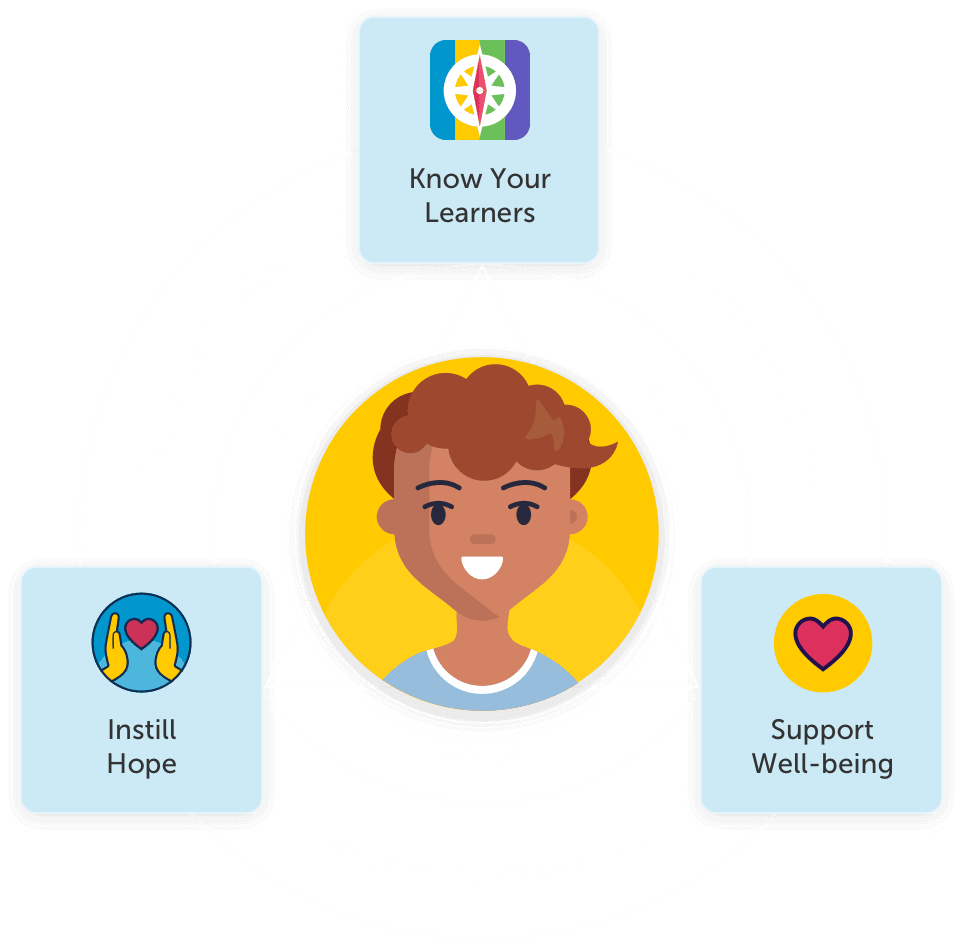
Build a Thriving Learning Community
Every learner deserves to be known, their well-being supported, and hope instilled in them no matter their circumstances.
Schedule a Call Today